
From Foggy to Focused: Natural Hormone Balance Strategies That Actually Fit Your Schedule
If you’ve ever stood in front of the fridge at 3pm, staring blankly because you can’t remember what you went there for this article is for you.

Please note that this blog post provides general information only and does not constitute professional advice. Should you make a purchase through an affiliate link in this post, I may earn a small commission at no extra cost to you.
You’re not losing your mind and you’re definitely not imagining the fact that your body feels completely different than it did five years ago.
What you’re experiencing—the brain fog, the exhaustion that coffee can’t fix, the weight that won’t budge despite “doing everything right”—isn’t a personal failing. It’s your hormones shifting during perimenopause and midlife, and for many of us this transition is disorienting to say the least.
Thankfully you don’t need to overhaul your entire life to feel better. You need a few strategic, science-backed changes that actually fit into your real, busy schedule.
This article is designed to show you exactly how to do that—starting with what’s happening in your body right now, and ending with practical strategies you can implement today.
What You’ll Learn in This Article:
- What your symptoms are actually telling you about hormone shifts
- The breakfast change that stabilizes blood sugar and energy
- Four micro-habits that compound into real transformation
- How to fix the “tired but wired” sleep cycle
- Which supplements are worth it (and which to skip)
Decoding Your Symptoms: What Fatigue, Brain Fog, Weight Gain, and Mood Swings Are Actually Telling You
If you’ve been Googling ‘why am I so tired all the time’, you’re far from alone. Research from a 2026 survey of more than 12,000 women over 35 found fatigue among the most commonly reported symptoms, reaching 93% in women who identified as perimenopausal. Yet we still feel like we’re doing something wrong.
The truth is, your body isn’t broken. It’s responding exactly as it should to very real hormonal shifts happening during midlife. As estrogen and progesterone begin their gradual decline—often starting in your late 30s or early 40s—they create a ripple effect throughout your entire system.
The symptoms you’re experiencing often aren’t just about sex hormones. They’re about the cortisol-insulin-hormone connection. When stress keeps your cortisol elevated (think a demanding job, or caring for aging parents and teenagers) and blood sugar swings throughout the day, this creates the perfect storm. Your body interprets this instability as a threat, holding onto weight, stealing your mental clarity, and leaving you exhausted but wired.
Now that you understand what your body is trying to tell you, let’s address the single most powerful lever you can pull: what you eat in the first hour of your day.

The Blood Sugar Foundation: Why What You Eat in the First Hour Sets Up Your Entire Day for Hormone Balance
Here’s something nobody tells us about turning 40: the breakfast that worked perfectly fine for two decades can suddenly become the reason we crash by 10am. Many women notice energy dips and stronger cravings in midlife, and steadier blood sugar through the morning is one thing you can influence, starting with breakfast.
The Truth About Carbs, Caffeine and Skipping Breakfast
When you skip breakfast or lead with carbs and caffeine, your blood sugar spikes then crashes. Your body interprets that crash as stress and pumps out more cortisol, triggering the stress-hormone spiral that leaves you exhausted and craving sugar by mid-morning. It’s not willpower—it’s biochemistry.
The Protein Solution: Prioritize Protein for Breakfast
Your body needs approximately 25-30 grams of protein at breakfast to stabilize blood sugar, reduce cortisol spikes, and support sustained energy. Here are five simple options to get you started:

Five plant-based breakfasts that take under 10 minutes: Choose one, master it, then rotate in others.
- Tofu scramble with spinach (20g protein) – crumbled firm tofu, turmeric, veggies
- Protein smoothie (25-30g) – plant protein powder, frozen berries, spinach, almond butter
- Overnight oats with hemp hearts (22g) – oats, plant milk, 3 tbsp hemp hearts, chia seeds
- Chickpea flour pancakes (18g per serving) – savory or sweet, made ahead and reheated
- Tempeh breakfast bowl (25g) – marinated tempeh, quinoa, avocado, greens
But breakfast is just the beginning. The real transformation happens when you stack small, sustainable habits throughout your day.
Micro-Habits for Women’s Hormone Balance: Small Changes That Compound Over Weeks, Not Perfection That Lasts Three Days
The biggest shifts come from small changes done consistently: your evening wind-down, your movement approach, your nervous system, and your hydration. Where grand transformations collapse under real life, micro-habits that require minimal willpower actually stick.
The Evening Wind-Down: Two Hours Before Bed
In the 2 hours before bed, dim your lights and lower the temperature in your home. This simple environmental shift signals your body to start producing melatonin, breaking the “tired but wired” cycle that keeps cortisol elevated at night.
Movement That Supports (Not Sabotages) Your Hormones
When we wake up exhausted after a bad night’s sleep, most of us tend to do one of two things: we either drag ourselves to the gym and push through a gruelling workout, or we completely give up on our fitness goals for the day and barely move. Neither option serves you – when you’re already exhausted, intense workouts can spike cortisol even higher.
Instead, why not aim for 20-30 minutes of gentle walking? Walking regulates blood sugar, supports lymphatic drainage, and calms your nervous system without depleting your already-limited energy reserves.
A fitness tracker like a Fitbit, Apple Watch, or Oura Ring can help you notice patterns: when you slept poorly, when your resting heart rate is elevated, when your body needs gentleness instead of intensity.
Using a fitness tracker helped me shift from a rigid schedule of 6am runs and intense workouts to a flexible routine that responds to my body’s signals. Some days that means strength training; other days it means yoga or dancing. I still prioritize resistance work for hormone balance—but only when my body is actually ready for the challenge.
The 5-Minute Nervous System Reset You Can Do Anywhere
Place one hand on your heart, one on your belly. Breathe in for 4 counts, hold for 4, exhale for 6. Repeat for 5 minutes. You can do this at your desk, in your car before walking into the house, or before a difficult conversation. This activates your parasympathetic nervous system and interrupts the stress-hormone spiral.
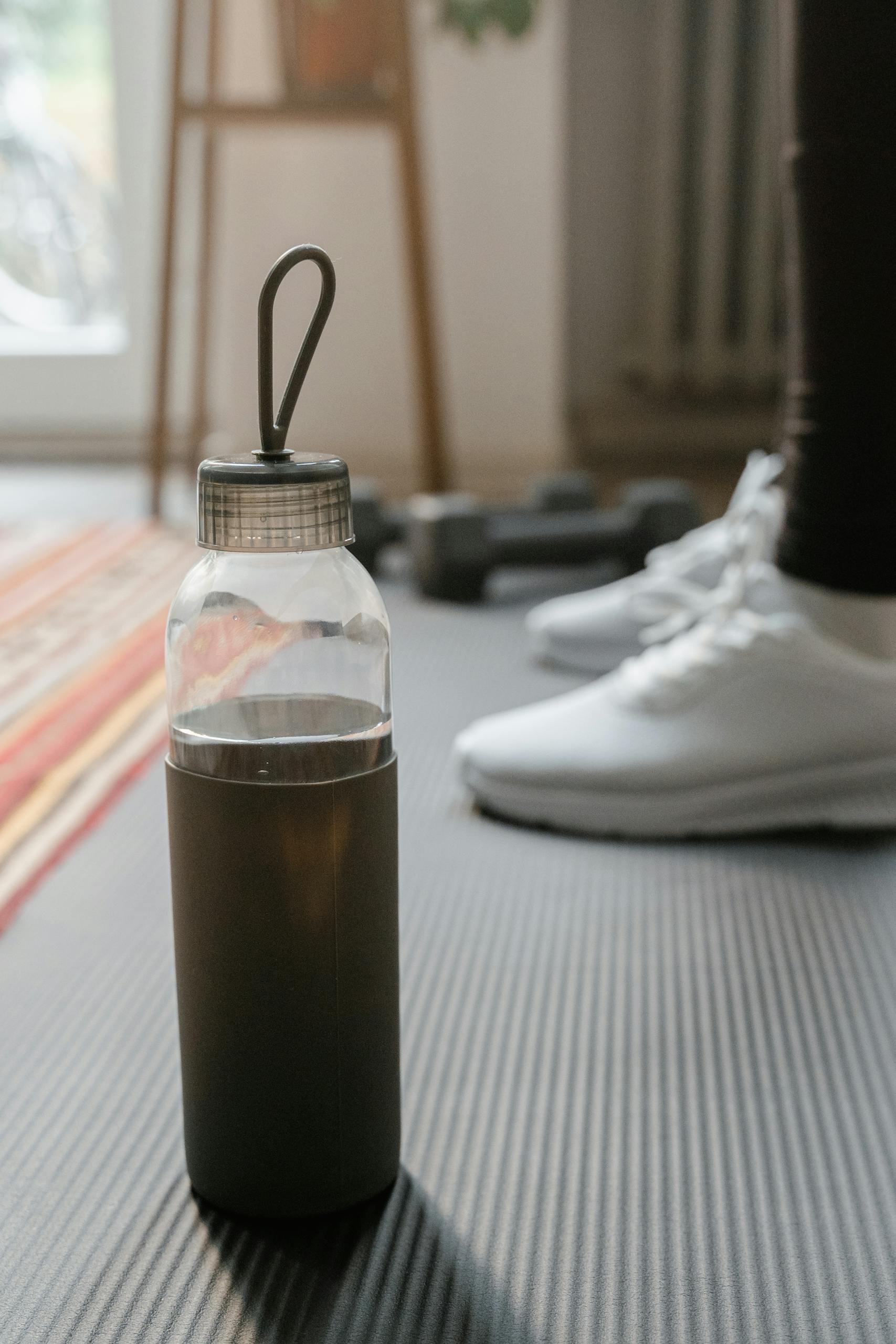
The Hydration Strategy Your Foggy Brain Needs
Dehydration mimics fatigue and brain fog, two symptoms you’re already battling. That’s why staying hydrated is crucial. The general guidelines for adults are 8 cups or 2-3 litres of water per day, ideally front-loaded before 2pm.
Beyond drinking plain water, you can also boost hydration by eating water-rich foods like cucumbers, berries, and leafy greens, which deliver H₂O along with beneficial nutrients and fiber.
Mistakes to Avoid
Trying to implement everything at once – Pick ONE habit and master it for two weeks before adding another.
Abandoning the practice after one “failed” day – Missing once is data, not failure. Just start again tomorrow.
Judging yourself for only making “small” changes – Consistency beats intensity and perfection every time. Small changes, practiced consistently, equal results.
These micro-habits create momentum during your waking hours, but there’s one foundation that makes or breaks everything else: sleep.
The Sleep-Hormone Connection: The Non-Negotiable Foundation Most Advice Skips

If you’ve dragged yourself around exhausted all day, only to find yourself wide awake at bedtime, chances are your cortisol and melatonin are out of sync.
When stress keeps cortisol elevated all day, it doesn’t magically disappear at bedtime. Instead, it suppresses melatonin production, leaving you exhausted but wired. Poor sleep further dysregulates your hormones, creating a vicious cycle. These three evening habits can help to break the cycle:
Three evening habits that support natural hormone balance through better sleep quality:
Stop eating 2-3 hours before bed – Late meals spike insulin and interfere with melatonin production
Create a consistent wind-down time – Same routine, same time, signals your body that sleep is coming
Keep your bedroom cool (65-68°F / 18-20°C) – Your body needs to drop its core temperature to fall asleep
The “Good Enough” Sleep Approach
If you can’t get 8 hours, prioritize consistency over duration. Going to bed and waking at the same time—even if it’s only 6.5 hours—stabilizes your circadian rhythm better than erratic 8-hour nights.
Sleep and daily habits form your foundation. Supplements can support that foundation—but only if you choose wisely.
What Actually Works (and What’s Just Expensive Marketing): Supplements and Supportive Practices for Balancing Hormones Naturally
Before you spend hundreds on proprietary blends promising “hormonal miracles,” start with the evidence-based basics.
Magnesium, Omega-3s, and Vitamin D
The reason these three get recommended constantly is because they actually work. Magnesium supports over 300 enzymatic reactions, including those that regulate cortisol and promote restful sleep. Omega–3s reduce inflammation and support brain function. Vitamin D acts more like a hormone than a vitamin, influencing everything from mood to immune health.
I take magnesium and vitaminD daily and prioritize Omega-3s through my diet. Magnesium is one of the few supplements where the effect is unmistakable—I’m noticeably calmer, I sleep better, and I can feel the difference within 24 hours of skipping it.
What to Skip
Expensive “hormone-balancing” teas, adaptogen powders with 47 ingredients, and anything promising to “reset” your hormones in 7 days.

The Strategic Approach to Taking Supplements
Add one supplement at a time, wait 4-6 weeks to assess, then decide whether to continue. Build your toolkit slowly and intentionally.
When Lifestyle Changes Aren’t Enough: Red Flags That Need Professional Support
Severe mood changes that interfere with relationships or work
- Severe mood changes that interfere with relationships or work
- Cycles shorter than 21 days or longer than 35 days
- Night sweats disrupting sleep nightly for weeks
- Persistent symptoms despite 6-8 weeks of consistent lifestyle changes
- Any thoughts of self-harm or hopelessness
You’re not failing if you need more support. Sometimes the most powerful thing you can do is ask for help.
Reclaim Your Focus, One Small Change at a Time
The greatest gift you can give yourself right now isn’t a perfect routine—it’s permission to start small and build from there.
You don’t need to implement everything in this article by Monday. Pick one thing: maybe it’s the protein-rich breakfast, the 5-minute nervous system reset, or finally buying that magnesium supplement. Master that single change for two weeks, then add another.
Progress compounds. The breakfast that stabilizes your blood sugar today makes the evening wind-down more effective tonight. Better sleep improves your energy tomorrow. Small wins stack into sustainable transformation.
Your body is adapting, not failing you. The reality is that there will be foggy days, but having tools that help makes all the difference.
Disclosure: The information provided in this blog post is for informational and educational purposes only. It should not be taken as professional advice of any kind or used as a substitute for such. Readers are encouraged to conduct their own research and always consult with qualified professionals before making any decisions based on the information provided in this blog post or on this website. This blog is supported by readers like you. When you purchase through affiliate links I provide, I may earn a small commission at no extra cost to you. For more comprehensive information, please refer to our Disclaimer page.
Continue Reading
-
How to Do a Time Audit: A Three-Day Guide to Finding Where Your Time Really Goes
Three days of writing down what you do can change every schedule you make afterwards. Learn how to do a time audit and see where your time really goes.
-
13 Signs Your Hormones Are Shifting in Your 40s (and What Each One Actually Means)
13 signs of hormonal changes in your 40s — from fatigue and brain fog to heart palpitations — decoded one by one, with a next step for each.
-
High-Protein, Plant-Based, and Over 40: The Breakfast Rebuild for Hormone Balance
The breakfast that worked for years can stop delivering after 40. Here’s the plant-based, high-protein rebuild that actually keeps up with hormone shifts.
-
Sleep Hygiene for Hormone Balance: The Perimenopause Guide to Actually Falling (and Staying) Asleep
That sound sleep you took for granted for decades quietly exited somewhere in your 40s — and no amount of chamomile tea has brought it back.