
Tame the Chaos: A Simple 5-Step System for Decluttering Your Home Without the Overwhelm
Clutter isn’t a willpower problem — it’s a systems problem. Here’s a simple 5-step home decluttering framework that actually sticks.

Please note that this blog post provides general information only and does not constitute professional advice. Should you make a purchase through an affiliate link in this post, I may earn a small commission at no extra cost to you.
You walk into a room with a clear purpose and leave empty-handed, your train of thought derailed by the visual noise around you. It’s a feeling most of us know well — and most of us have tried to fix. The declutter weekends, the donated bags, the re-organised shelves. But without a system underneath it all, clutter has a way of quietly returning. That ends today.
Here’s something worth knowing before we begin: clutter is not a reflection of who you are. It’s not laziness, and it’s not a character flaw. For most of us, it’s simply the result of a busy life outpacing the systems we have in place to manage it. The good news is that systems can be built — and they don’t need to be complicated to work.
This article isn’t about achieving a Pinterest-perfect home. It’s about creating a space that feels manageable, calm, and genuinely yours.
What you’ll discover in this article:
- Why clutter is a systems problem, not a willpower problem — and the mindset shift that makes all the difference
- The One Room at a Time rule — how to identify where to start when everything feels equally urgent
- The 4-Box Method — a simple home decluttering framework that removes the paralysis from every session
- How to handle the emotional weight of letting things go, without guilt
- A simple maintenance habit that keeps the visual noise from creeping back
Why Clutter Isn’t a Willpower Problem — It’s a Systems Problem
The first thing to set aside before we begin is the idea that a cluttered home says something about you. Research confirms what many of us feel instinctively: clutter is directly linked to elevated cortisol levels, the stress hormone that keeps our nervous system in a low-grade state of alert.
But here’s the reframe that changes everything: clutter accumulates not because we’re lazy or disorganised, but because life moves faster than our systems can keep up. A busy life outpacing the structures we have in place to manage it — that’s the real culprit.
This is also why the “big declutter weekend” rarely sticks. Without a system underneath it, we’re essentially bailing out a boat without fixing the leak. The bags get donated, the surfaces get cleared, and within weeks the visual noise quietly returns.
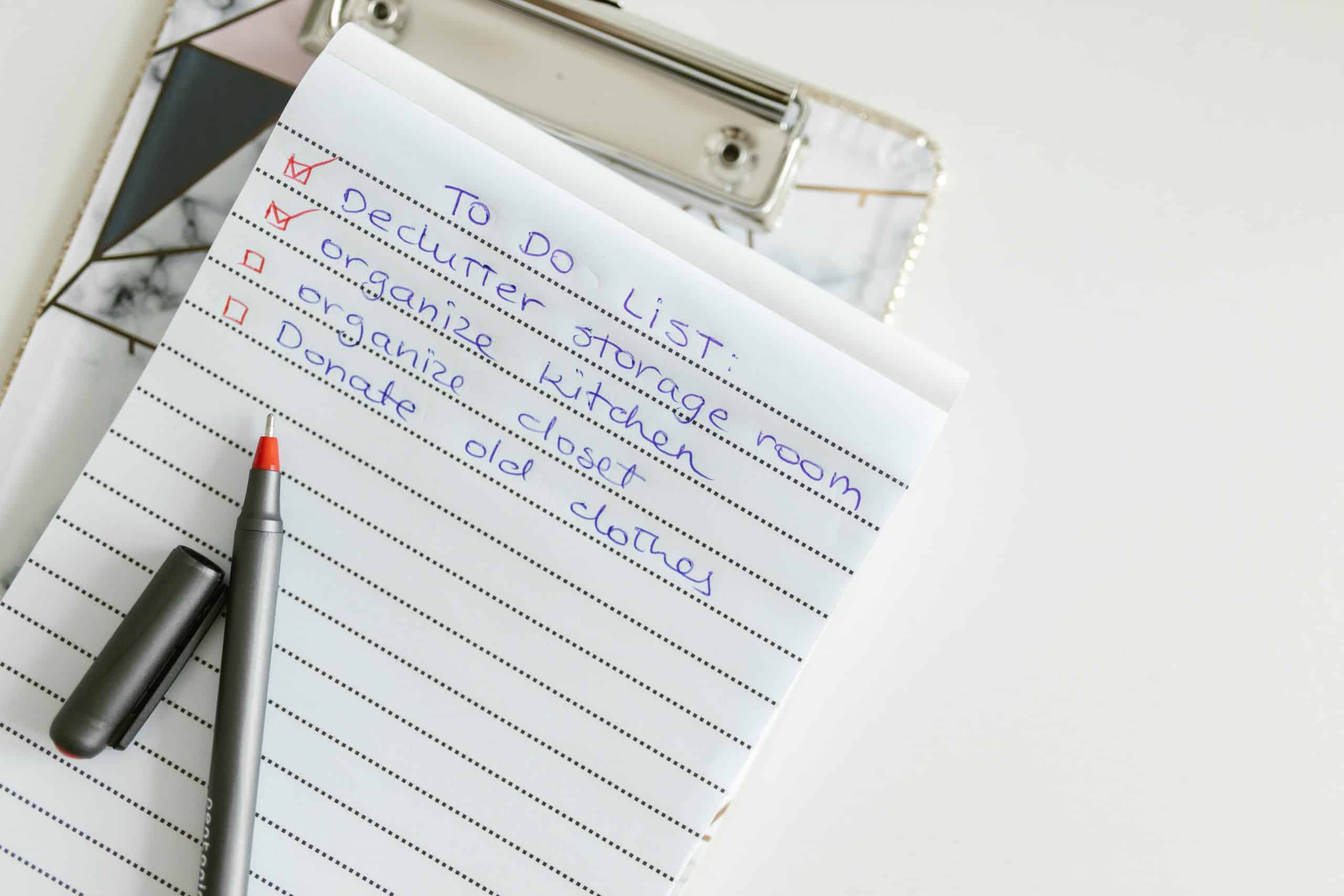
The goal of this article isn’t a perfect home. It’s a manageable one — built on a simple, sustainable system that works for your real life, not an idealised version of it. You don’t need to overhaul everything at once. You just need a place to start and a framework to follow.
My relationship with clutter has always been a simple one: it makes me feel awful. Not mildly uncomfortable — genuinely overwhelmed, discombobulated, and low. I’m not a minimalist; I love my things. But every object in my home needs a place to live, because the moment things start piling up without a home, I feel it — in my mood, my focus, and my sense of control. That feeling is exactly what drove me to build the system I’m sharing with you today. I didn’t declutter my way out of chaos. I built a system to make sure chaos never got a foothold.
Before You Begin: Give Yourself Grace
The state of your home right now is not a reflection of your worth, your capability, or your intentions. It’s a reflection of a full life that hasn’t yet had the right system to support it. Before you read another word, give yourself permission to start exactly where you are — not where you think you should be. Progress here doesn’t look like a showroom. It looks like one cleared surface, one donated bag, one small decision made. That is enough.
The “One Room at a Time” Rule: Where to Start When Everything Feels Urgent
One of the most common reasons decluttering stalls before it begins is the paralysis of not knowing where to start. Every room feels equally overwhelming, which means we stand in the middle of the house, rotate slowly, and do nothing.
The solution is simpler than you might think: start with the room that affects your daily mood the most. Not the worst room, not the biggest room — the one whose visual noise costs you the most energy every single day.
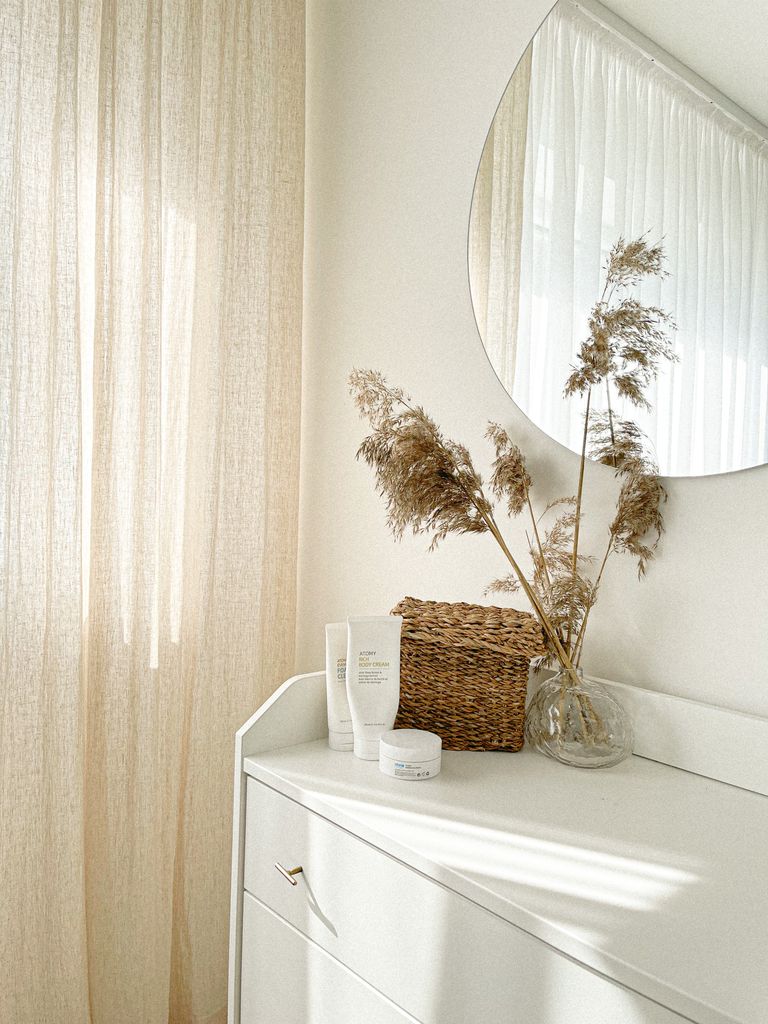
For most women, this is either the bedroom or the kitchen. Your bedroom is the first space you see in the morning and the last you see at night — its atmosphere directly sets the tone for your day and the quality of your sleep. Your kitchen is the engine room of your home; clutter here creates friction at the moments when you have the least patience for it. Either is an excellent place to begin.
If you’re genuinely unsure which room to prioritise, ask yourself: which space, if cleared, would make me exhale? That’s your starting point.
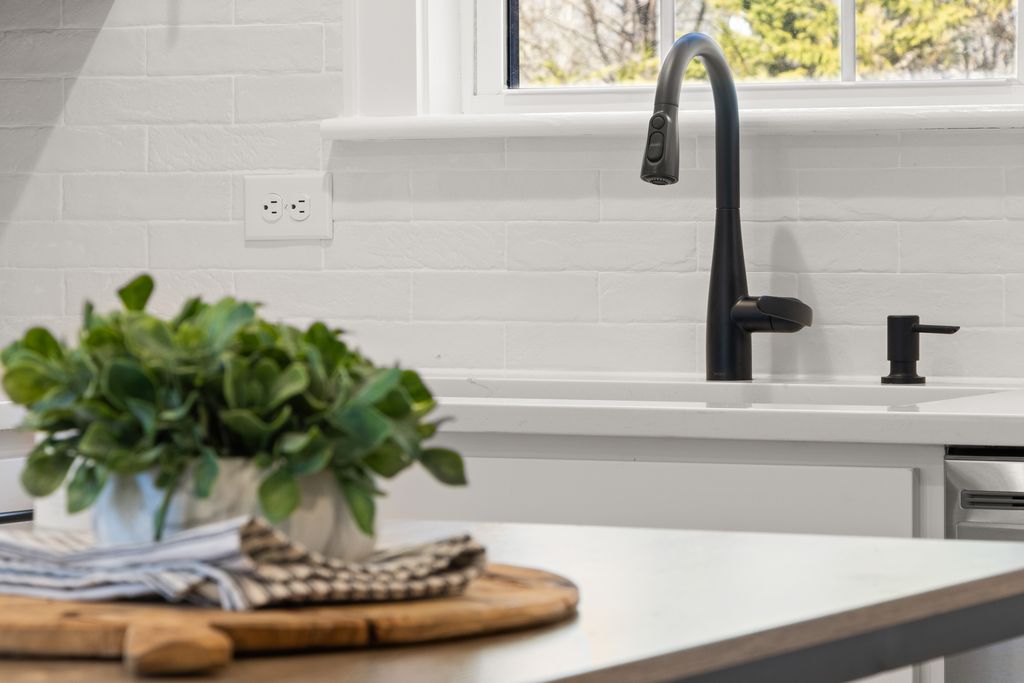
Once you’ve chosen your room, resist the pull to drift into others. It’s tempting, once momentum builds, to start pulling things out of cupboards in the hallway or tackling the spare room. Stay in your chosen space until it’s done. One completed room will do more for your motivation than three half-finished ones.
Completing something, however small, creates the momentum that carries you forward. Finished beats perfect every time.
The 4-Box Method: A Decision Framework That Removes the Paralysis
Once you’ve chosen your room, the next challenge is the one that stops most decluttering sessions in their tracks: the endless, exhausting cycle of picking something up, deliberating, and putting it back down again. The 4-Box Method solves this by giving every single item a defined destination before you begin — which means decisions take seconds rather than minutes.
Before you start, gather four boxes, bags, or designated floor spaces and label them clearly:
Keep — items you use regularly, love genuinely, or need practically. If it earns its place in your home, it stays.
Donate — items in good condition that no longer serve you but could serve someone else. A good rule of thumb: if you haven’t used it in a year and don’t miss it, it belongs here.
Discard — items that are broken, worn out, or genuinely past their usefulness. These go straight to the bin, no guilt required.
Relocate — items that belong in your home but not in this room. Rather than stopping to put them away mid-session and losing momentum, they go in this box to be redistributed at the end.

Every item you pick up has exactly four possible destinations — which eliminates the decision fatigue that derails most decluttering attempts. You’re not deciding whether to keep something forever. You’re simply deciding which box it belongs in right now.
Work methodically through the room, section by section. Finish one area completely before moving to the next. At the end of your session, the Donate box leaves the house as soon as possible — ideally the same day. The longer it lingers, the greater the temptation to retrieve things from it.
Troubleshooting Guide: When the 4-Box Method Gets Tricky
“I feel guilty discarding it — it was expensive.” The money is already spent. Keeping something you don’t use doesn’t recover the cost; it just costs you space and mental energy.
“It belongs to someone else in the household.” Create a fifth “Return” pile for items belonging to partners, children, or housemates. It’s not your decision to make — but it is your right to flag it.
“I’m not ready to decide.” Create a “Maybe Box,” seal it, date it, and store it out of sight for 30 days. If you haven’t opened it or missed anything in it, donate it unopened.
“It has sentimental value but I don’t use it.” You’re allowed to keep things purely because they bring you joy. But if the item is creating guilt rather than joy, consider photographing it before letting it go — you keep the memory without the physical weight.
How to Handle the Emotional Weight of Letting Things Go
Decluttering becomes a different experience entirely when the items in question belonged to someone you loved, were given as gifts, or carry the weight of who you used to be or what you once hoped for. This is where most decluttering methods fall short — they give you a framework for objects, but not for the feelings attached to them.
Emotional clutter deserves its own approach. Moving too fast through sentimental items creates guilt and regret. Moving too slowly means you never move at all. The goal is a gentle middle ground — intentional, not rushed, and guided by what genuinely serves you now.
When my mother passed away unexpectedly, I found myself facing not just grief but rooms full of her things. The overwhelm was significant — the sadness of loss layered on top of the very practical reality of deciding what to do with a lifetime of belongings. I worked through it slowly and systematically, and what helped me most was a simple personal filter: keep what I would genuinely use, and keep what held a positive memory. Everything else I tried to place with people I knew would appreciate it — friends, family members, people who had a need for it. Giving her things to people who would truly use them felt like an extension of her, not an erasure of her. It transformed letting go from loss into something that felt closer to love.

That experience shaped how I think about sentimental decluttering, and here is the framework that came out of it:
Keep items that bring you genuine joy, not guilt — there’s a difference between an object that makes you smile and one that makes you feel obligated.
Rehome thoughtfully where you can. Knowing that something you loved is going to someone who needs it makes releasing it feel purposeful rather than painful.
Photograph items before letting them go. You keep the memory without the physical weight — and the photograph is often enough.
Give yourself time with the hardest decisions. Use the Maybe Box from the Troubleshooting Guide above. Thirty days of distance often brings surprising clarity.
And finally — you are allowed to keep things simply because they make you happy. A decluttered home isn’t a home stripped of meaning. It’s a home where everything that remains has earned its place.
Building a Simple Maintenance Habit So Clutter Doesn’t Creep Back
Decluttering a room feels wonderful. Watching it slowly return to its previous state two weeks later feels demoralising. The difference between a home that stays manageable and one that doesn’t isn’t willpower — it’s maintenance.
Once the initial work is done, you’re no longer moving mountains — you’re simply keeping the path clear. And the foundation of any sustainable maintenance habit rests on one simple principle: everything in your home needs a home of its own. When every item has a designated place to live, putting things away becomes automatic rather than effortful. Clutter, at its core, is simply a collection of things that don’t have anywhere to go. Solve the “home” problem, and you solve most of the clutter problem.
From there, two simple habits do the heavy lifting:
The Daily Reset — a 10-minute sweep at the end of each day where anything out of place is returned to its home. This isn’t a cleaning session; it’s a reset. It prevents the gradual accumulation that turns manageable into overwhelming. The best time to do it is one you’ll actually stick to — after dinner, before bed, or whenever your day naturally winds down.

The Weekly Declutter Check — 15 minutes, once a week, to catch anything that has drifted. This is when you process the post, clear the surfaces, and do a quick scan of your priority room. Think of it as a weekly check-in — catch what’s drifting before it becomes a problem.
Together, these two habits take less than two hours a month. That is a remarkably small investment for the mental clarity a tidy, organised home delivers.
The Weekly Reset: Your 15-Minute Maintenance Routine
Set a timer. Work through these five steps every week:
- Process any paper or post — file, action, or discard. Nothing stays on the surface.
- Return relocated items — anything that has drifted from its home goes back.
- Scan your priority room — the space you started with. How is it holding up?
- Empty any landing zones — hallway tables, kitchen counters, the chair in the bedroom. These attract clutter magnetically.
- Note anything that needs a proper home — if something keeps ending up homeless, it needs a designated space, not repeated tidying.
Done consistently, this 15-minute habit prevents the need for another big declutter session. The system maintains itself.
Reclaim Your Space, Reclaim Your Mind
A calm, organised home isn’t a luxury reserved for people with more time, more space, or fewer responsibilities. It’s available to anyone with a simple system and the willingness to start small.
The five steps we’ve covered today aren’t about achieving perfection. They’re about building something sustainable — a framework that works with your real life, bends when things get busy, and gives you a reliable way back to calm when the visual noise starts to creep in.
Decluttering your space does something quietly remarkable: it gives you mental room to breathe. When you’re not unconsciously processing the disorder around you, that energy goes back to you — your focus, your creativity, your sense of peace. A manageable home is one of the most underrated forms of self-care there is.
You don’t need a free weekend, a perfect plan, or a home that’s ready to be photographed. You need one room, four boxes, and the decision to begin.
Your Next Step
Pick your priority room — the one whose visual noise costs you the most energy every day. Set aside an hour this week, gather your four boxes, and begin. Just one room. Just one session. That single decision, made and acted on, is the foundation everything else is built on.
The system is simple. The results are real. And you’re more ready than you think.
Disclosure: The information provided in this blog post is for informational and educational purposes only. It should not be taken as professional advice of any kind or used as a substitute for such. Readers are encouraged to conduct their own research and always consult with qualified professionals before making any decisions based on the information provided in this blog post or on this website. This blog is supported by readers like you. When you purchase through affiliate links I provide, I may earn a small commission at no extra cost to you. For more comprehensive information, please refer to our Disclaimer page.
Continue Reading
-
How to Do a Time Audit: A Three-Day Guide to Finding Where Your Time Really Goes
Three days of writing down what you do can change every schedule you make afterwards. Learn how to do a time audit and see where your time really goes.
-
13 Signs Your Hormones Are Shifting in Your 40s (and What Each One Actually Means)
13 signs of hormonal changes in your 40s — from fatigue and brain fog to heart palpitations — decoded one by one, with a next step for each.
-
High-Protein, Plant-Based, and Over 40: The Breakfast Rebuild for Hormone Balance
The breakfast that worked for years can stop delivering after 40. Here’s the plant-based, high-protein rebuild that actually keeps up with hormone shifts.
-
Sleep Hygiene for Hormone Balance: The Perimenopause Guide to Actually Falling (and Staying) Asleep
That sound sleep you took for granted for decades quietly exited somewhere in your 40s — and no amount of chamomile tea has brought it back.