
High-Protein, Plant-Based, and Over 40: The Breakfast Rebuild for Hormone Balance
The breakfast that worked for years can stop delivering after 40. Here’s the plant-based, high-protein rebuild that actually keeps up with hormone shifts.
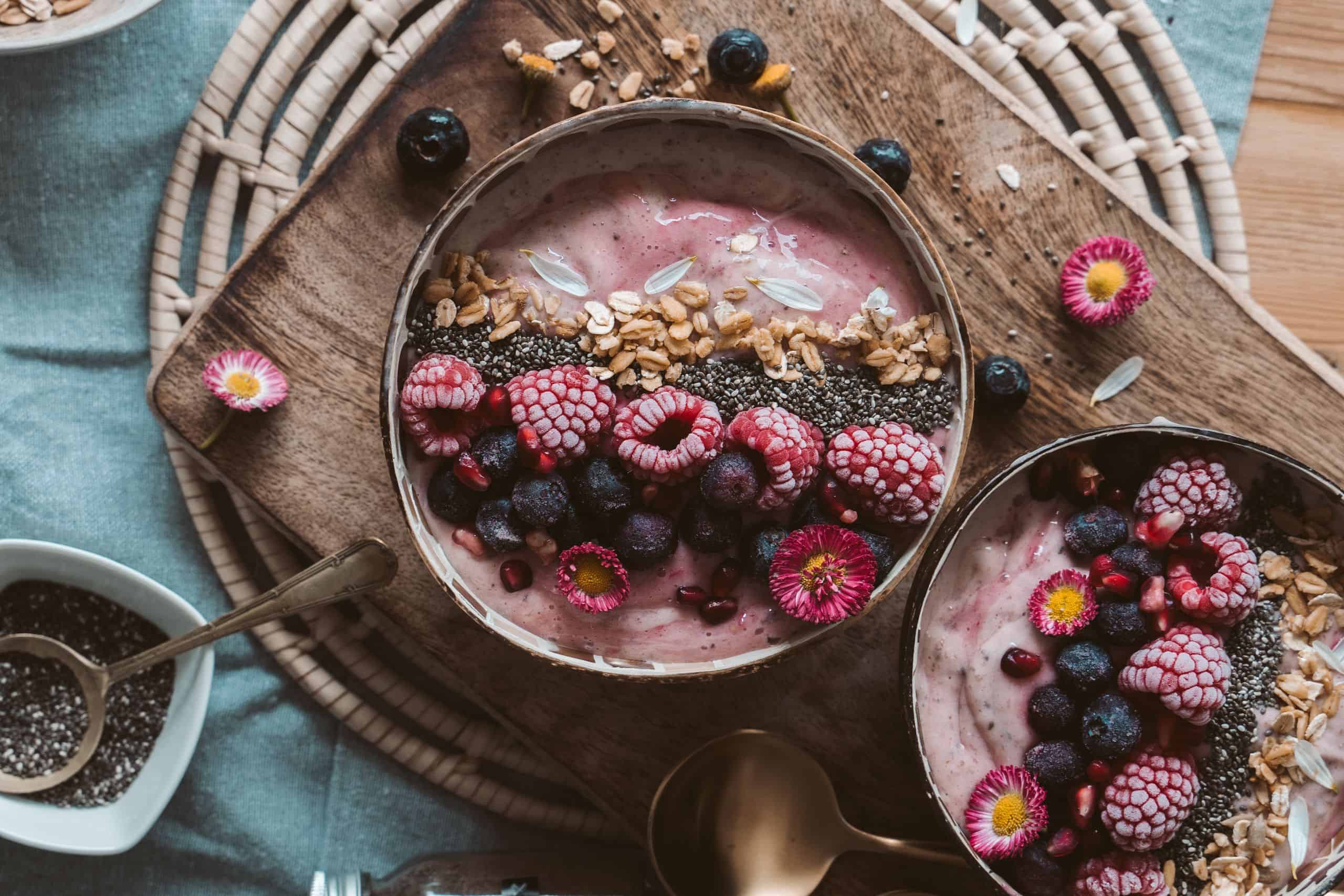
Please note that this blog post provides general information only and does not constitute professional advice. Should you make a purchase through an affiliate link in this post, I may earn a small commission at no extra cost to you.
Between waking up and your first bite of food, cortisol and blood sugar are already negotiating how the rest of your morning goes — and what you eat next determines who wins. Lose that negotiation, and you’re looking at a mid-morning crash, sudden cravings, and a fog that coffee won’t touch.
This isn’t a sign you’ve suddenly become undisciplined. The same breakfast that worked reliably for years can stop delivering during perimenopause. For years, my go-to breakfast was a bowl of muesli with berries — a genuinely healthy choice by most standards, or so I assumed. But gradually over the years this breakfast left me feeling starving by 10am and craving sugar. The reason it stopped working comes down to one vital macronutrient: protein.
As someone who has been plant-based since my mid-thirties I also realized that there’s no shortage of high-protein breakfast ideas built around eggs, dairy, and meat, but practical, tasty plant-based options are a lot harder to find.
What you’ll discover in this article:
- Why the cortisol-blood sugar connection hits harder after 40 — and why breakfast matters more than it used to
- How much plant protein you actually need, and the specific sources that get you there
- A simple formula — protein, fiber, fat — you can apply to any breakfast, not just a fixed list
- A handful of ready-to-go combinations to start with tomorrow morning
Understanding what’s happening between your cortisol and blood sugar in that first hour is where the fix begins.
The Cortisol-Blood Sugar Connection: Why Breakfast Hits Differently After 40
Blood sugar and cortisol are closely linked. A sharp dip or swing in blood sugar registers as stress to your body, prompting a cortisol spike to help stabilize things. That relationship exists at any age, but perimenopause changes the equation.
Estrogen plays a protective role in insulin sensitivity, helping your body manage those swings smoothly. As estrogen declines during this transition, that protection fades, and blood sugar swings become sharper and harder to buffer — which means the same breakfast that kept you steady for years can suddenly leave you crashing by mid-morning. Such a sharp cortisol response can trigger the kind of stress signal that causes your body to hold onto fat rather than release it.
This is exactly why strategies that worked well in your 30s can backfire now.
Protein is the piece that has the power to change the equation. Unlike a carb-heavy start to the day, protein slows how quickly glucose enters your bloodstream, softening both the spike and the crash that follows. Once I started eating a higher-protein breakfast, I noticed my hunger signals quieted down for the rest of the day, and my cravings for sweet things disappeared almost completely.
Getting enough of it from plant sources alone takes a bit more intention than reaching for a couple of eggs, but it is very possible and well worth the effort.
Did You Know? — Plant-Based Eating and Menopause Symptoms
A 2018 study published in Maturitas surveyed hundreds of women and found that perimenopausal vegans reported less bothersome hot flashes and physical symptoms like fatigue and achiness than omnivores. Eating more vegetables and less meat specifically, not just following a vegan label, was linked to milder symptoms.
That connection has since been tested more rigorously in a randomized controlled trial, which found that a low-fat, plant-based diet including whole soybeans significantly reduced moderate-to-severe hot flashes, with many participants reporting they stopped entirely by the study’s end. This doesn’t mean symptoms disappear for everyone who goes plant-based, but it’s a genuine research thread worth knowing about if hormone symptoms are part of what’s motivating your food choices.
Plant Protein Sources and Hitting 25-30g at Breakfast
Once you know the target — roughly 25-30g of protein — the real question becomes which plant foods actually get you there without a science project every morning.
A few reliable options:
- Extra-firm tofu: about 30g per 200g serving (roughly half a standard block)
- Tempeh: about 20g per 3/4 cup
- Lentils or other legumes: about 18g per cup, cooked
- Rolled oats: about 4g per 30g — modest on its own, but a strong base to build the other sources around
- Plant-based protein powder: typically 20-25g per scoop, varies by brand
- Peanut butter: about 8g per 2 tablespoons
- Soy milk: about 7.6g per cup (250ml)
- Chickpea flour: about 7g per 30g — useful for savory pancakes or a quick batter
- Hemp hearts or pumpkin seeds: roughly 3-4g of protein per tablespoon from either — they’re largely interchangeable as a topping for oats, yogurt, or a smoothie bowl
- Chia seeds or flax seeds: about 4-5g of protein per 2-3 tablespoons, along with significant fiber and healthy fat
No single food needs to carry the whole target on its own. Combining two or three sources gets you there faster than trying to eat an enormous portion of just one — tofu scrambled with a spoonful of hemp hearts stirred in, or oats made with soy milk and a scoop of protein powder, clears 25g easily.
On the “isn’t plant protein incomplete” question — a common concern whether you call your approach plant-based or vegan: soy specifically — tofu, tempeh, and soy milk — already contains all nine essential amino acids on its own, so it doesn’t need pairing. For everything else, eating a variety across the day, rather than perfectly combining at every meal, is enough to cover your bases.
The amounts matter, but so does the mix — which is where a simple formula makes this easier to apply without measuring everything.
You’re in Good Company
Dr. Stacy Sims — an exercise physiologist specializing in women’s health and perimenopause — eats what she calls a “plant-centered” diet herself, and has written specifically about how women can meet their protein needs from plant sources during this life stage, citing the same hormone research above.
Elite endurance athlete Rich Roll takes it further still, having competed at an ultra-endurance level for close to two decades on an entirely plant-based diet — proof that plant protein can power serious physical demands, not just everyday adequacy.
Neither built their approach around convenience. Both point to the same conclusion this article makes: with enough intention, plant protein isn’t a compromise.
The Protein + Fiber + Fat Formula: A Reusable Tool for Any Breakfast
The list above works well as a starting point, but the real skill worth building is a formula you can apply to anything on your plate, not just these specific combinations.
Protein slows how quickly glucose enters your bloodstream, fiber does the same by adding bulk and slowing digestion, and fat further delays gastric emptying — meaning the carbohydrates in your meal absorb more gradually rather than all at once. Research comparing isolated nutrients to combined meals confirms this: glycemic response was significantly blunted when protein, fat, or fiber were added to a carbohydrate meal, compared to carbohydrate alone.
In practice, that means almost any breakfast can be adjusted using the same formula. A bowl of oats made with just water and topped with honey is nearly all carbohydrate — add a scoop of protein powder, a spoonful of nut butter, and a tablespoon of chia seeds, and the same bowl becomes a genuinely stabilizing meal.
You don’t need to hit exact numbers for each piece, and several foods already do double duty. Whole grains like rolled oats are a genuinely good fiber source on their own, and lentils and chickpea flour bring meaningful fiber alongside the protein you’re already counting on them for. Seeds like the chia and flax already on your list go further still, delivering protein, fiber, and fat all in one — about as close to a true three-in-one as plant food gets.
The mental checklist is simply this: protein, fiber, fat — however many foods it takes to get there. If a breakfast is missing one, that’s your cue for what to add.
Ready-to-Go Combinations
A few easy, plant-based protein breakfast ideas that put the formula into practice, ready with minimal prep:
Overnight Protein Oats
30g rolled oats soaked overnight with a scoop of plant protein powder, a tablespoon of chia seeds, a small handful of walnuts or pecans, half a cup of soy milk, and a cup of blueberries stirred in. This is my favorite of the four — quick, easy, and I rarely get tired of it, plus it keeps me full for hours.
Protein: oats, protein powder, chia, walnuts, soy milk (~35g) · Fat: chia, walnuts · Fiber: oats, chia, blueberries
Loaded Tofu Scramble
Firm tofu crumbled and pan-fried in extra virgin olive oil with a cup of baby spinach folded in, topped with a sprinkle of hemp hearts and a few slices of avocado on the side.
Protein: tofu, hemp hearts (~35g) · Fat: hemp hearts, avocado, olive oil · Fiber: spinach*, avocado
Tempeh Hash
Crumbled tempeh pan-fried in extra virgin olive oil with a cup of baby spinach, topped with pumpkin seeds and a few slices of avocado for the fat component.
Protein: tempeh, pumpkin seeds (~27g) · Fat: pumpkin seeds, avocado, olive oil · Fiber: spinach*, avocado
*Baby kale works as a swap for spinach in either recipe if you want a higher-fiber option that’s still fully pre-washed and ready to go, and shredded cabbage goes further still — though it changes the texture and flavor more noticeably than a straightforward leafy green swap would.
Protein Smoothie
Soy milk blended with a scoop of protein powder, a tablespoon of flaxseed, a spoonful of peanut butter, and a cup of blueberries.
Protein: soy milk, protein powder, flaxseed, peanut butter (~35g) · Fat: flaxseed, peanut butter · Fiber: flaxseed, blueberries
Pick one, master it, then rotate in the others as you get comfortable — you don’t need all four in your regular lineup to see the difference.
Beyond the Basics — A DIY Protein Boost
If you want to stretch your protein budget further, soya chunks (also labeled TVP, or textured vegetable protein) are worth knowing about. Dry, they pack around 50g of protein per 100g — among the highest of any plant food — plus decent fiber and almost no fat, since they’re made from defatted soy flour.
Soy curls are a related product worth knowing apart from this, not a substitute: made from whole soybeans rather than defatted flour, they retain more of the bean’s natural fat, so they won’t give you the same low-fat protein boost, though they’re a perfectly good ingredient in their own right for a heartier, more savory dish.
Blitzed into a fine powder in a blender or food processor, soya chunks (not soy curls, which don’t grind down the same way) work as a genuinely cheap stand-in for store-bought protein powder, stirred into pancake batter, quick breads, or baked goods. It takes a bit more effort than scooping a tub, but it’s a budget-friendly option worth having in your back pocket.
Rebuild One Breakfast at a Time
Hitting 25-30g of protein at breakfast doesn’t require animal products, and it doesn’t take a complicated routine to pull off either. A handful of go-to combinations — built on the protein, fiber, fat formula — cover the same ground eggs and bacon claim to, without the trade-off people who choose to eat plant-based are so often told to expect.
None of this demands overhauling your entire morning. Pick one combination, make it your default for the next couple of weeks, and let it become second nature before adding another. And if sleep has been part of your hormone balance puzzle too, the previous piece in this series covers the cortisol-melatonin connection behind those restless nights.
Disclosure: The information provided in this blog post is for informational and educational purposes only. It should not be taken as professional advice of any kind or used as a substitute for such. Readers are encouraged to conduct their own research and always consult with qualified professionals before making any decisions based on the information provided in this blog post or on this website. This blog is supported by readers like you. When you purchase through affiliate links I provide, I may earn a small commission at no extra cost to you. For more comprehensive information, please refer to our Disclaimer page.
Continue Reading
-
How to Do a Time Audit: A Three-Day Guide to Finding Where Your Time Really Goes
Three days of writing down what you do can change every schedule you make afterwards. Learn how to do a time audit and see where your time really goes.
-
13 Signs Your Hormones Are Shifting in Your 40s (and What Each One Actually Means)
13 signs of hormonal changes in your 40s — from fatigue and brain fog to heart palpitations — decoded one by one, with a next step for each.
-
Sleep Hygiene for Hormone Balance: The Perimenopause Guide to Actually Falling (and Staying) Asleep
That sound sleep you took for granted for decades quietly exited somewhere in your 40s — and no amount of chamomile tea has brought it back.
-
How to Host a Gathering Everyone Will Love: A Busy Woman’s Guide to Stress-Free Entertaining
Hosting doesn’t have to leave you depleted. Discover the simple shifts that make you — and your guests — love every gathering.