
How to Host a Gathering Everyone Will Love: A Busy Woman’s Guide to Stress-Free Entertaining
Hosting doesn’t have to leave you depleted. Discover the simple shifts that make you — and your guests — love every gathering.
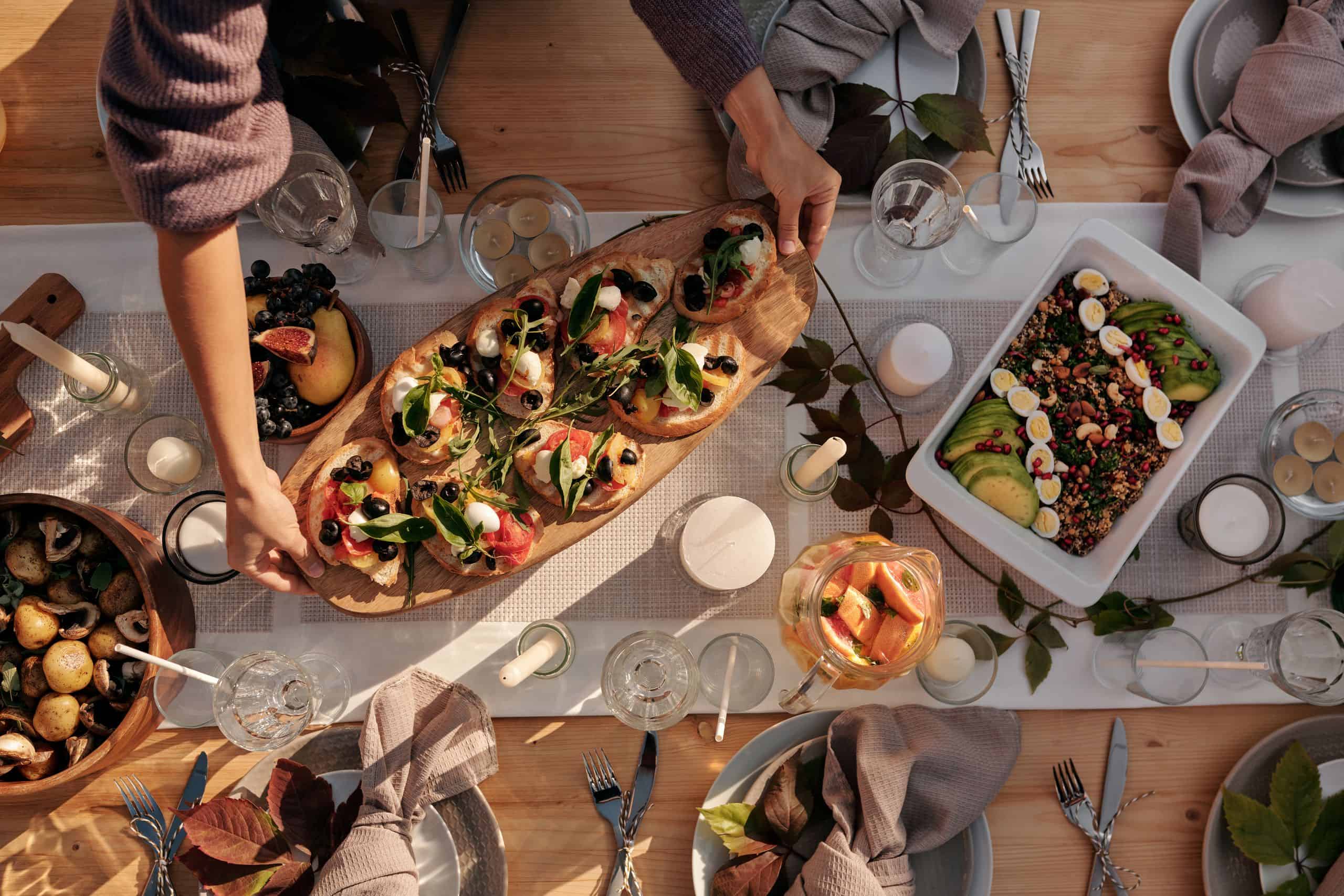
Please note that this blog post provides general information only and does not constitute professional advice. Should you make a purchase through an affiliate link in this post, I may earn a small commission at no extra cost to you.
There’s a particular kind of exhaustion that comes with hosting. Not the good kind — the kind where you’ve worked so hard to make everything perfect that by the time your guests arrive, you’re already counting down to when they leave.
If that feeling is familiar, you’re not alone — and you’re not doing it wrong. What you’re doing is what most of us do: pouring enormous energy into the parts of hosting that guests barely notice, while the thing they came for — your company, your warmth, the feeling of being genuinely welcomed — gets whatever’s left of you at the end.
The truth is, a gathering everyone loves has very little to do with your home, your cooking, or your table setting. It has everything to do with how you feel and how you make your guests feel.
A few years ago, in the middle of a gathering that was going perfectly well by every external measure, I slipped away and lay down for thirty minutes. I was completely depleted. I’d invited too many people, planned too ambitious a menu, and spent days cleaning corners of my home that no one would ever see. When I finally came back to my own party, I knew something had to change. So I started analyzing exactly what was draining me — and then I systematically simplified everything. The result was a backwards planning approach that meant by the time guests arrived, the hard work was already done and I felt calm and ready to be present with them. That shift changed everything.
In this article, you’ll discover:
- Why what guests actually remember has nothing to do with perfection — and what it has everything to do with
- A backwards planning method that eliminates day-of chaos and lets you arrive at your own gathering calm and ready
- Simple food and drink strategies that feel effortless without sacrificing the enjoyment of a beautiful meal
- How to stay present as a host — and recover gracefully when, inevitably, something doesn’t go to plan
Hosting doesn’t have to cost you your enjoyment of your own gathering. Let’s change the way you entertain.
Redefine success: what guests actually remember (and what they don’t)
The truth is, what people remember most about social experiences isn’t the food, the décor, or whether the house was immaculate — it’s how the experience made them feel. Warmth, laughter, genuine conversation, and the sense of being truly welcome are what linger long after the evening ends. The canapés, however beautifully arranged, are a pleasure — but they’re not the reason anyone leaves feeling glad they came.

Yet most of us plan a gathering in exactly the wrong direction. We treat hosting as a performance — a carefully staged production where we are simultaneously the director, the set designer, the chef, and the lead actress. We measure success by how impressed our guests are, rather than how connected they feel. And in doing so, we exhaust ourselves chasing a standard that was never what our guests were hoping for in the first place.
Your guests don’t arrive hoping to be impressed. They arrive hoping to belong. They want to relax, to laugh, to feel that the person who invited them is genuinely glad they came. That’s it. That’s the whole brief.
Shifting your definition of success from “flawless execution” to “genuine connection” isn’t lowering the bar — it’s setting the right one. And once you make that shift, every decision that follows becomes simpler, calmer, and more intentional.
Simple Touches That Create a Memorable Atmosphere
The details that make guests feel truly welcome rarely cost much — and most take minutes to put in place.
- Lighting sets the mood before a word is spoken. Switch to lamps or candles rather than overhead lighting, and consider adding string or fairy lights where they work in your space. Warm, low light instantly transforms a room from functional to inviting.
- Add a simple scent — a candle, a diffuser, or something simmering gently on the stove. Unlike any other sense, scent travels directly to the brain’s emotional centre, which is why a familiar, pleasant smell can make a space feel instantly warm and welcoming.
- Curate a playlist in advance and have it playing softly when guests arrive. Silence when the first person walks in can feel awkward; music signals that the evening has already begun.
- Create small moments of interest around the room — a floral arrangement, a bowl of nuts or crackers on a side table, a stack of photo albums, a book of puzzles or a game that might spark conversation. These details invite guests to settle in and feel at home rather than sitting formally and waiting for the evening to begin.
Planning backwards: the prep timeline that prevents day-of chaos
Most hosting stress doesn’t come from the gathering itself — it comes from everything you try to cram into the hours right before it. The solution isn’t doing more, faster. It’s planning backwards from the moment your guests arrive, so the day of the gathering requires as little actual work as possible.
Start with your guest list. A 2022 Canadian Social Connection Survey found that gatherings of five to eight people consistently produced the highest levels of enjoyment, with emotional closeness declining as groups grew larger. A smaller, more intentional guest list isn’t a compromise — it’s often the better choice, for you and for the quality of the evening itself.
Once your guest list is set, work backwards from arrival time.
Two weeks before: Check your calendar before you check anything else. A week packed with appointments, deadlines, or other stress isn’t the week to host — even if it’s the week that’s free on paper. Choose a week your life can actually support.
One to one and a half weeks before: Confirm your menu and write your shopping list. Identify what can be made ahead and frozen. This is also the week to simplify your family’s everyday meals — a ready meal or takeout night isn’t a failure, it’s a strategy.

The days before: Buy your groceries, prep what freezes well, and clean the spaces guests will actually see — living areas, bathroom, dining space. Skip anything behind closed doors. Start prepping food.
The day before: Cook and prep anything that holds well overnight. Plan serving dishes and any special décor.
The morning of: Cook and prep any remaining food items. Quick clean and tidying of surfaces. Add decorative touches and set the table. Lay out serving dishes and set out drinks.
One hour before: This block is for you — showering, getting dressed, and arriving at your own gathering calm rather than frantic.
Day-Of Prep Checklist
Your deep clean is already done. This is your morning-of run-through — the final sweep before guests arrive.
Entrance:
- Clear any clutter from the hallway or entryway
- Make space for coats and bags
Living area:
- Plump cushions and fold throws neatly
- Clear surfaces of everyday clutter
- Wipe any dust-prone surfaces
- Vacuum thoroughfares if needed
- Switch to lamps — overhead lighting off
Kitchen:
- Clean the kitchen after remaining food prep is done
- Clear and wipe down visible surfaces
- Empty the dishwasher so it’s ready to be filled as the evening progresses
- Keep the sink clear — have a plan for where dishes go so it doesn’t become overwhelming later
Dining space:
- Set the table
- Lay out serving dishes
- Check napkins, condiments, and serving utensils
- Set up the self-serve drinks station
Bathroom:
- Wipe sink, toilet, and mirrors if needed
- Put out fresh hand towels
- Check soap and toilet paper — spare roll within easy reach
Simple food and drink strategies that feel effortless
The food you serve at a gathering matters — but not in the way most of us think. Guests aren’t arriving with a critical eye and a scorecard. They’re arriving hungry, happy to be there, and far more interested in the conversation than in whether your starter took three hours to prepare. The goal isn’t to impress — it’s to feed people well while keeping yourself sane in the process.
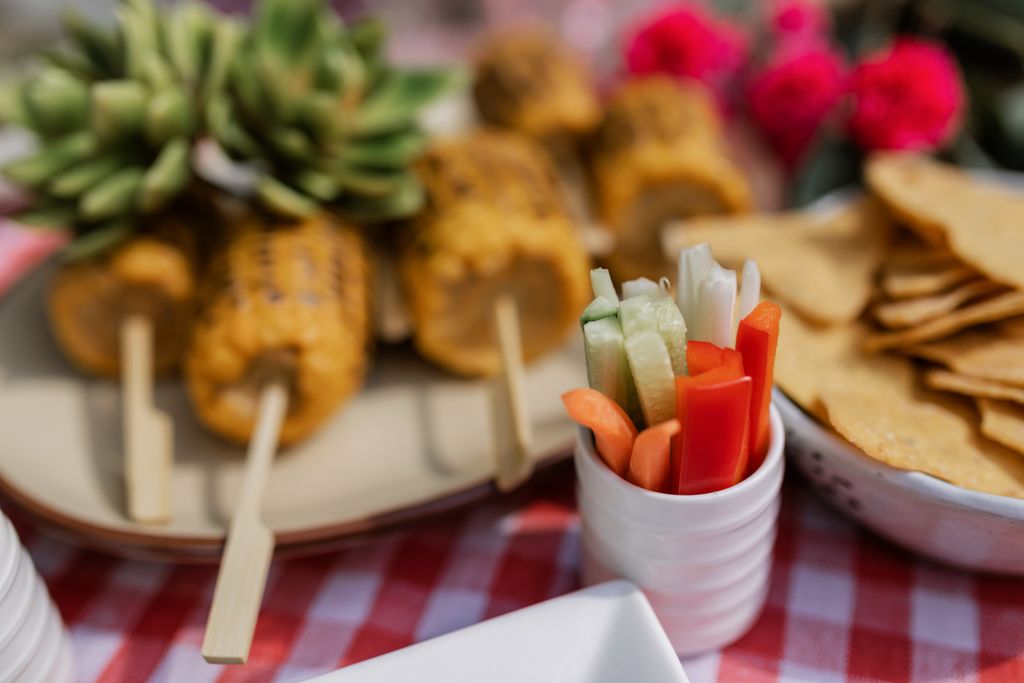
The most effortless hosting menus share a few things in common: most of the work happens before the day of the gathering, the dishes travel well from kitchen to table, and nothing requires your full attention while guests are in your home. A meal that has you hovering anxiously over the stove while your guests sit without you isn’t a success, however beautiful it tastes.

A few strategies that make an immediate difference: choose a menu where at least two of the three courses can be made ahead in their entirety. Opt for dishes that are forgiving — a slow-cooked main that improves overnight, a dessert that sets in the fridge, a starter that’s assembled rather than cooked. Make-ahead is not a shortcut. It’s the strategy of an experienced host.

For drinks, set up a self-serve station before guests arrive — still and sparkling water, a signature drink or two, and glasses within easy reach. This single step removes the need to play bartender all evening and frees you to actually be with your guests.
What an Effortless Three-Course Menu Actually Looks Like
A beautiful, memorable meal doesn’t have to mean hours in the kitchen on the day. Here’s a simple example of what a well-planned plant-based menu might look like:
Starter: Hummus with crackers and veggie sticks
Why it works: The hummus is made the day before, and the veggie sticks take minutes to prepare on the day.
Main: Lentil ragu lasagne served with a simple green salad
Why it works: Most of the hands-on prep is done in advance – the lasagne is assembled the day before and the vinaigrette for the salad is made-ahead or store bought. On the day, just bake the lasagne, put together the salad, and serve.
Dessert: Cashew and coconut cream tiramisu
Why it works: Sets in the fridge overnight, plates in minutes, and feels indulgent without being complicated.
Every dish on this menu can be largely prepared before your guests arrive — leaving you free to enjoy the evening you worked so hard to create.
When things go sideways (and they will): how to stay calm, adapt, and still shine
No gathering goes exactly to plan. The soufflé sinks, a guest cancels last minute, the conversation stalls, or something burns while you’re answering the door. These moments don’t define your gathering — how you respond to them does.

The hosts who handle mishaps with grace share one quality: they’ve stopped treating the evening as a performance that can be ruined. When you’ve already made the internal shift from “flawless execution” to “genuine connection,” a collapsed dessert becomes a story rather than a disaster. Your guests take their emotional cues from you. If you laugh it off, they laugh with you. If you visibly unravel, the room feels it.
One strategy every experienced host should have in her back pocket: a simple backup for your most vulnerable dish. A well-assembled cheese board can rescue almost any starter or dessert situation — and put together in five minutes, it looks intentional rather than improvised.
The most memorable gatherings are rarely the ones that went perfectly. Your most powerful tool as a host isn’t a perfectly set table or a flawless menu — it’s your presence. When you’re calm, warm, and genuinely enjoying your own gathering, your guests feel it in every moment they’re there.

You Already Are the Host You Want to Be
Hosting a gathering that everyone loves — including you — isn’t a talent some people are born with. It’s a set of intentional choices, made before anyone rings the doorbell.
A smaller, more considered guest list. A menu planned around your time, not your ambition. A home that’s clean where it counts and welcoming where it matters. These are the foundations of a gathering people remember — not because everything was perfect, but because everything felt easy, warm, and genuinely considered.
You don’t have to be an experienced host to make people feel at home. You just have to be a present one. And that starts with your very next invitation.
Disclosure: The information provided in this blog post is for informational and educational purposes only. It should not be taken as professional advice of any kind or used as a substitute for such. Readers are encouraged to conduct their own research and always consult with qualified professionals before making any decisions based on the information provided in this blog post or on this website. This blog is supported by readers like you. When you purchase through affiliate links I provide, I may earn a small commission at no extra cost to you. For more comprehensive information, please refer to our Disclaimer page.
Continue Reading
-
How to Do a Time Audit: A Three-Day Guide to Finding Where Your Time Really Goes
Three days of writing down what you do can change every schedule you make afterwards. Learn how to do a time audit and see where your time really goes.
-
13 Signs Your Hormones Are Shifting in Your 40s (and What Each One Actually Means)
13 signs of hormonal changes in your 40s — from fatigue and brain fog to heart palpitations — decoded one by one, with a next step for each.
-
High-Protein, Plant-Based, and Over 40: The Breakfast Rebuild for Hormone Balance
The breakfast that worked for years can stop delivering after 40. Here’s the plant-based, high-protein rebuild that actually keeps up with hormone shifts.
-
Sleep Hygiene for Hormone Balance: The Perimenopause Guide to Actually Falling (and Staying) Asleep
That sound sleep you took for granted for decades quietly exited somewhere in your 40s — and no amount of chamomile tea has brought it back.